
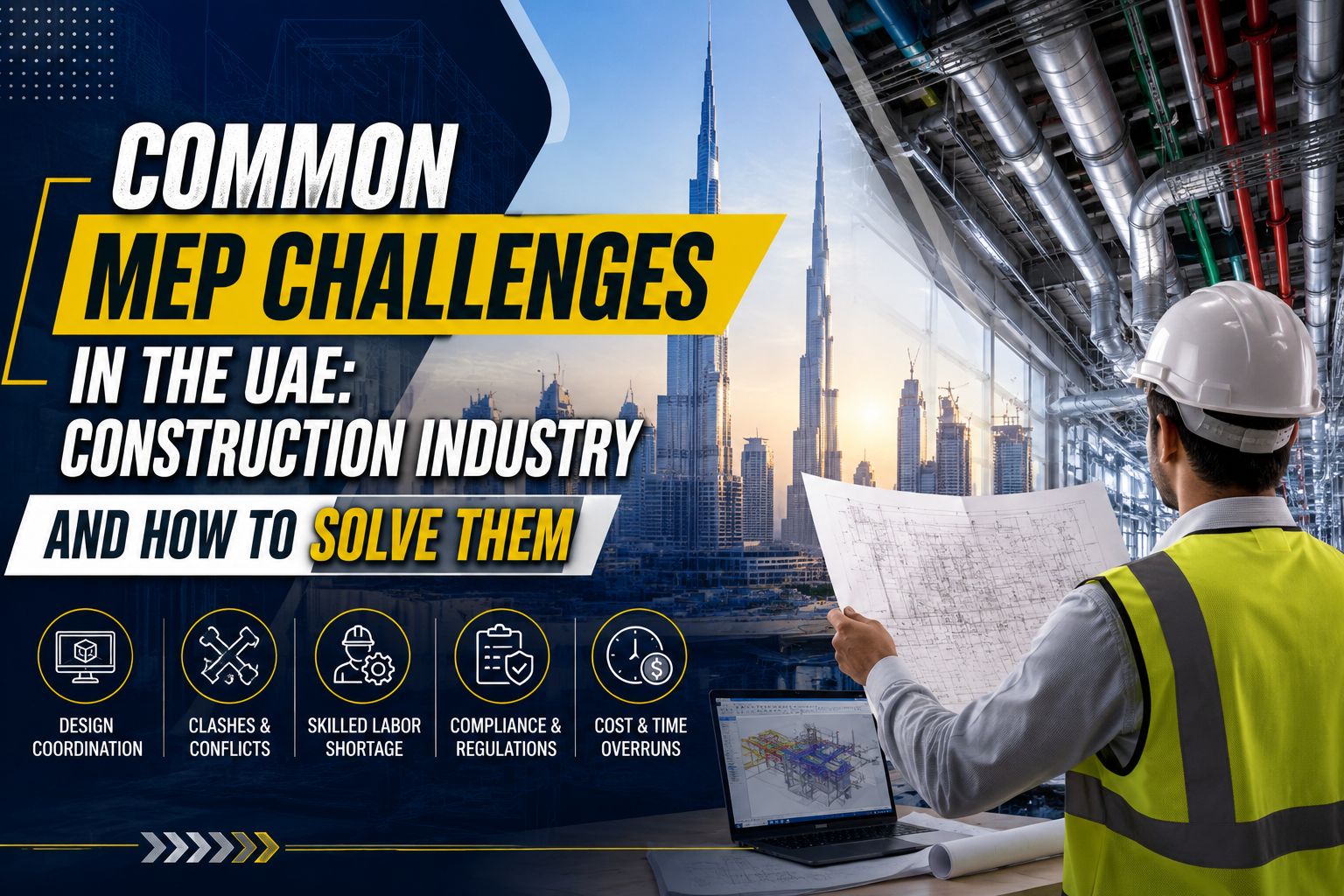
Mechanical, Electrical, and Plumbing (MEP) systems may remain largely hidden once a building is complete, but they play a critical role in how that building performs. HVAC determines indoor comfort, electrical systems support day-to-day operations, and plumbing and drainage systems are essential to health, hygiene, and functionality.
In the UAE, MEP execution comes with additional considerations. High temperatures place significant demands on cooling systems, developments often involve complex building services, and projects must meet applicable authority, safety, and sustainability requirements. Dubai’s Al Sa’fat system, for example, includes requirements aimed at improving energy, water, and mechanical and electrical system efficiency.
At Prestige Group, we believe the biggest MEP risks are rarely caused by one technical problem. They usually occur where design, procurement, compliance, and site execution overlap. That is why we focus on identifying risks early and putting practical controls in place.
Why MEP Planning Matters in UAE Construction:
For a Construction Company in UAE, MEP planning should start well before equipment reaches the site. A poorly coordinated system can lead to clashes, redesign, procurement delays, rework, and commissioning problems.
Good MEP planning helps construction teams:
- Coordinate services with architectural and structural elements
- Reduce costly rework
- Improve energy and water efficiency
- Meet applicable authority requirements
- Control procurement and installation schedules
- Achieve smoother testing and handover
The objective is not simply to install MEP systems. It is to ensure that they work together reliably throughout the building’s lifecycle.
Common MEP Challenges in the UAE Construction Industry:
1. MEP Coordination and Clash Detection:
One of the most common MEP challenges in UAE projects is insufficient coordination between mechanical, electrical, plumbing, structural, and architectural teams.
Ducts, pipes, cable trays and other services frequently compete for limited ceiling and shaft space. If clashes are discovered only after installation begins, the result can be redesign, material wastage, and schedule disruption.
How to solve it:
Use coordinated shop drawings and, where appropriate, BIM-based clash detection before installation. Hold multidisciplinary coordination reviews and ensure that approved drawings are clearly communicated to site teams.
Our approach: We treat coordination as a pre-construction activity rather than something to be resolved when teams are already working on site.
2. Managing High Cooling Loads:
The UAE’s climate makes HVAC one of the most critical components of many building projects. Poorly calculated cooling requirements can result in oversized equipment, unnecessary energy consumption, or inadequate indoor comfort.
Dubai’s Al Sa’fat framework specifically promotes improved energy efficiency and more efficient mechanical and electrical systems.
How to solve it:
- Carry out accurate cooling-load calculations
- Select equipment based on actual building requirements
- Consider insulation and building-envelope performance
- Use efficient controls and variable-speed systems where suitable
- Plan HVAC maintenance from the outset
For us, HVAC efficiency is not just about selecting an efficient unit. The complete system—from design to controls and commissioning—needs to work efficiently.
3. Authority Approvals and Fire-Safety Requirements:
MEP systems can be closely linked to building approvals and fire and life-safety requirements. Electrical systems, fire protection, ventilation, and other services may need to meet specific project and authority requirements.
Dubai Municipality maintains building-control procedures and construction-related requirements, while Dubai Civil Defence publishes requirements under the UAE Fire and Life Safety Code of Practice.
How to solve it:
Create an approval matrix before construction begins. Identify the applicable authority, required submission, responsible person, and target date for each approval.
More importantly, don’t wait until the inspection stage to discover that an installation does not match the approved design.
4. Long-Lead Equipment and Procurement Delays:
MEP procurement can involve equipment with longer manufacturing or delivery periods, including major HVAC equipment, pumps, switchgear, and specialised components.
A delayed component can have a domino effect on installation and commissioning.
How to solve it:
- Identify long-lead items during design development.
- Freeze critical specifications early.
- Track approvals and procurement milestones.
- Maintain communication with suppliers.
- Evaluate technically acceptable alternatives where permitted.
Procurement planning should run alongside the construction programme—not behind it.
5. Energy and Water Efficiency:
Sustainability is becoming an increasingly important part of UAE development. Dubai’s Al Sa’fat system covers areas including energy efficiency, water efficiency, materials and building performance.
This makes MEP design particularly important because mechanical and electrical systems can have a major influence on a building’s operational resource consumption.
How to solve it:
Consider efficient HVAC, lighting, and controls, water-saving fixtures, and building-management systems during the design stage. Also, evaluate lifecycle performance rather than choosing equipment based solely on initial purchase price.
6. Installation Quality and Skilled Workforce:
A technically sound MEP design can still fail if installation quality is inconsistent.
Incorrect connections, inadequate insulation, poor pipework installation, improper testing or incomplete documentation can create problems during commissioning and after handover.
How to solve it:
Use qualified teams, method statements, inspection checklists, and stage-wise quality inspections. Critical installations should be inspected before they are concealed.
We also recommend keeping installation records and test results organised throughout the project rather than trying to recreate documentation at handover.
7. Design Changes and Rework:
Construction projects evolve. A change to a wall, ceiling, room layout or equipment location can affect several MEP systems.
For example, relocating an air-conditioning unit may require changes to ductwork, electrical connections, drainage, and controls.
How to solve it:
Introduce formal change control. Before approving a change, assess its effect on:
- MEP design
- Cost
- Procurement
- Programme
- Authority approvals
- Commissioning
A five-minute coordination review can sometimes prevent days of rework.
8. Testing, Commissioning, and Handover:
Another common MEP issue appears at the end of the project. Systems may be installed but not fully tested, balanced, integrated or documented.
This can create last-minute pressure and delay handover.
How to solve it:
Develop the commissioning plan early. Schedule testing progressively and maintain records for equipment, systems, and inspections. Ensure as-built drawings and operation and maintenance documentation are updated throughout the project.
MEP Pre-Construction Checklist:
Before MEP work begins, we recommend checking:
- MEP design and shop drawings approved.
- BIM/clash coordination completed where applicable.
- Authority requirements identified.
- Long-lead equipment identified.
- HVAC load calculations reviewed.
- MEP shafts and service spaces coordinated.
- Material specifications approved.
- Installation and inspection procedures established.
- Testing and commissioning plan prepared.
- Change-control process established.
Two Practical Tips for Better MEP Management:
Tip 1: Never allow major MEP installation to begin without coordinated drawings and clearly defined service routes.
Tip 2: Track design changes, procurement, approvals and testing on one project-level MEP risk register.
How We Approach MEP Challenges at Prestige Group:
At Prestige Group, we look at MEP challenges from a project-wide perspective. A technical issue can quickly become a commercial issue if it causes rework, delays procurement or affects handover.
That is why we emphasise early coordination, compliance awareness, documentation, procurement planning and quality control. Our aim is to help construction businesses identify risks before they reach the site and turn MEP management into a structured part of project delivery.
Conclusion:
The Common MEP challenges in the UAE construction industry are manageable when they are addressed early. Whether the issue involves HVAC performance, authority approvals, procurement, coordination or commissioning, the cost of prevention is usually far lower than the cost of correcting a problem after installation.
For a Construction Company in UAE, the right question is not simply, “How do we fix MEP problems?” It is, “How do we prevent them from reaching the site in the first place?”
At Prestige Group, we help businesses take that proactive approach. If you are planning a new development or looking to strengthen MEP coordination and project controls, speak with our team today. Let’s identify your potential MEP risks early, strengthen your project processes and create a clearer path to timely, compliant, and successful project delivery.